Vending Machines and UAE VAT: No Tax Invoice Needed, but the Records and Dates Still Matter
Under FTA Directive No. 8 of 2026, UAE vending machine sales need no tax invoice. The 3 records you must keep, what counts as a vending machine, and when VAT is due if an operator runs it.
On 19 November 2026 the FTA issued Directive on Tax Transactions No. 8 of 2026, on the VAT treatment of vending machines. It’s short, three pages, and it settles two practical questions: whether every vending sale needs a tax invoice, and when VAT is due when someone else runs the machine.
1. No tax invoice for vending machine sales
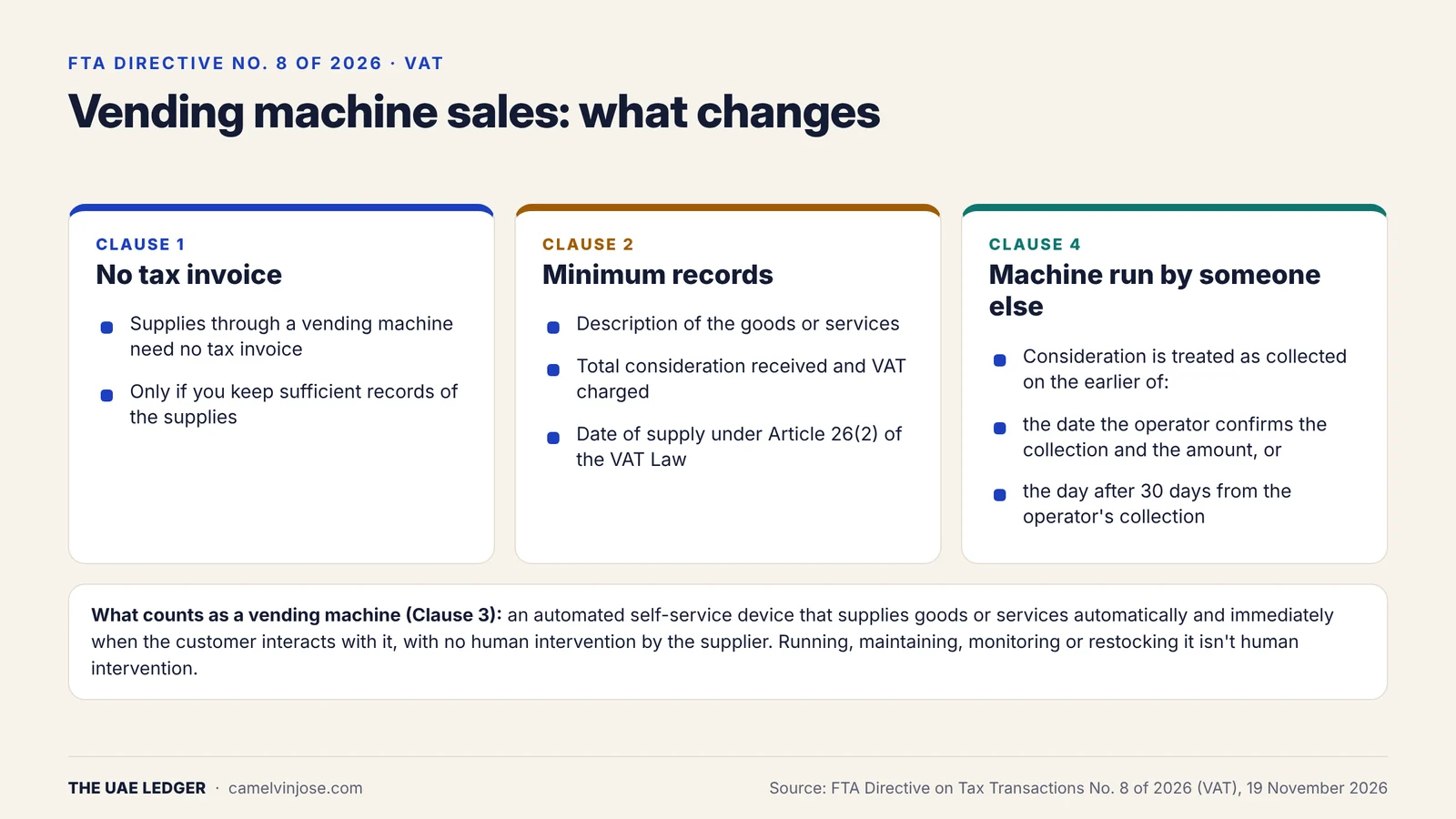
A Taxable Person supplying goods or services through a vending machine doesn’t have to issue a tax invoice for those supplies. The condition: it must keep sufficient records to substantiate the details of the supplies.
So the obligation moves from the invoice to the records. The VAT is still due. What goes away is the paperwork per sale.
2. The minimum records
The directive sets the minimum. Your records must show:
- a description of the goods or services supplied,
- the total consideration received and the VAT charged, and
- the date of supply, as set by Article 26(2) of the VAT Law.
If your machines report sales electronically, that report is likely to be the core of these records. If they don’t, you need another reliable way to capture what was sold and when the money was collected.
3. What counts as a vending machine
The directive defines a vending machine as an automated self-service device used to supply goods or services automatically and immediately, as a result of direct physical interaction by the customer, without any human intervention by the supplier.
Running, maintaining, monitoring or restocking the machine doesn’t count as human intervention. So a machine that staff refill each morning still qualifies. A sale where a staff member takes the order or hands over the goods doesn’t.
4. When someone else runs the machine
Many businesses place machines with an operator who collects the money and reports back. For that case, the directive fixes the date the consideration is treated as collected through the machine, for Article 26(2). It’s the earlier of:
- the date the Taxable Person receives information from the operator confirming the collection and the amount collected, or
- the day after 30 days from the operator’s collection.
The 30-day backstop matters. A slow monthly report from the operator doesn’t delay your VAT. If the operator collected on 2 March and only reports in April, the consideration is treated as collected on the day after 30 days from 2 March, and the sale belongs in the VAT return for that period.
What to do now
- Check each machine against the definition. Automated, immediate, no staff involved in the sale.
- Make sure your sales reports capture all three minimum fields (description, total and VAT, date of supply) for every machine.
- If a third party operates your machines, review the contract. Ask for collection reports well inside 30 days, showing the date and amount of each collection.
- Reconcile operator reports to bank receipts each VAT period, and keep both.
- Map the dates to your VAT periods using the earlier-of rule, so sales near the period end land in the right return.
Source: FTA Directive on Tax Transactions No. 8 of 2026 for Value Added Tax on the Tax Treatment of Vending Machines, issued 19 November 2026, to be published in the Official Gazette.
Common questions
Do vending machine sales need a tax invoice in the UAE?
No. Under FTA Directive No. 8 of 2026, a Taxable Person selling goods or services through a vending machine doesn't have to issue a tax invoice, provided it keeps sufficient records of the supplies.
What records are needed for vending machine sales?
At a minimum: a description of the goods or services supplied, the total consideration received and VAT charged, and the date of supply under Article 26(2) of the VAT Law.
What counts as a vending machine for UAE VAT?
An automated self-service device that supplies goods or services automatically and immediately when the customer physically interacts with it, with no human intervention by the supplier. Running, maintaining, monitoring or restocking the machine doesn't count as human intervention.
When is VAT due if someone else operates my vending machine?
The consideration is treated as collected on the earlier of the date the operator confirms the collection and the amount, or the day after 30 days from the date the operator collected it.
This article is general information and may be out of date. Check the latest guidance from the Federal Tax Authority before acting.