E-Invoicing
The UAE’s structured e-invoicing system, accredited providers and rollout dates.
E-invoicing means issuing and receiving invoices as structured electronic data instead of PDFs or paper. In the UAE, businesses exchange them through Accredited Service Providers approved by the Ministry of Finance.
A short history
- October 2024Legal amendments introduce e-invoicing concepts into UAE law.
- February 2026The Ministry of Finance publishes the first e-invoicing guidelines.
- 1 July 2026The pilot programme begins with a selected group of taxpayers.
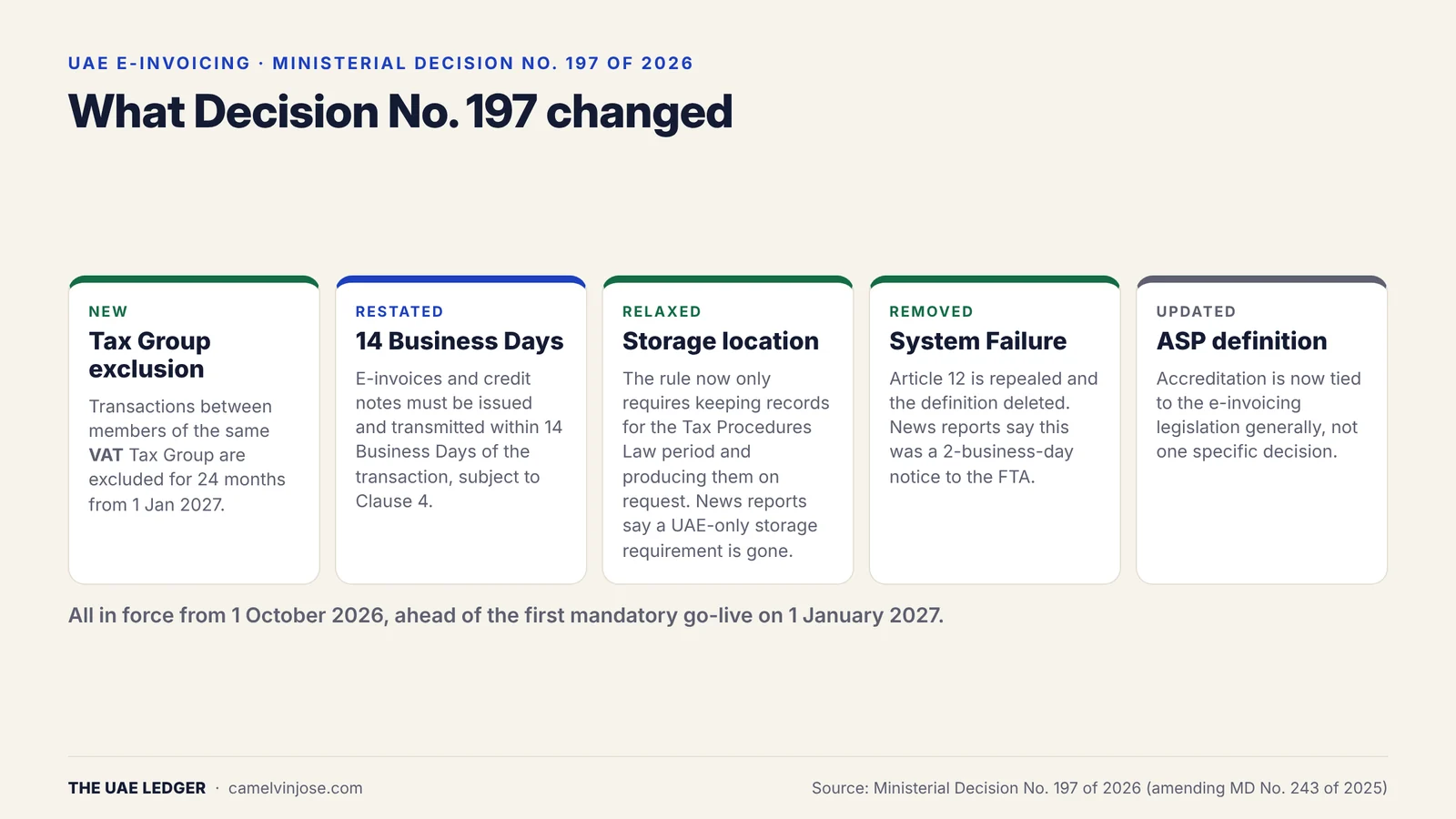
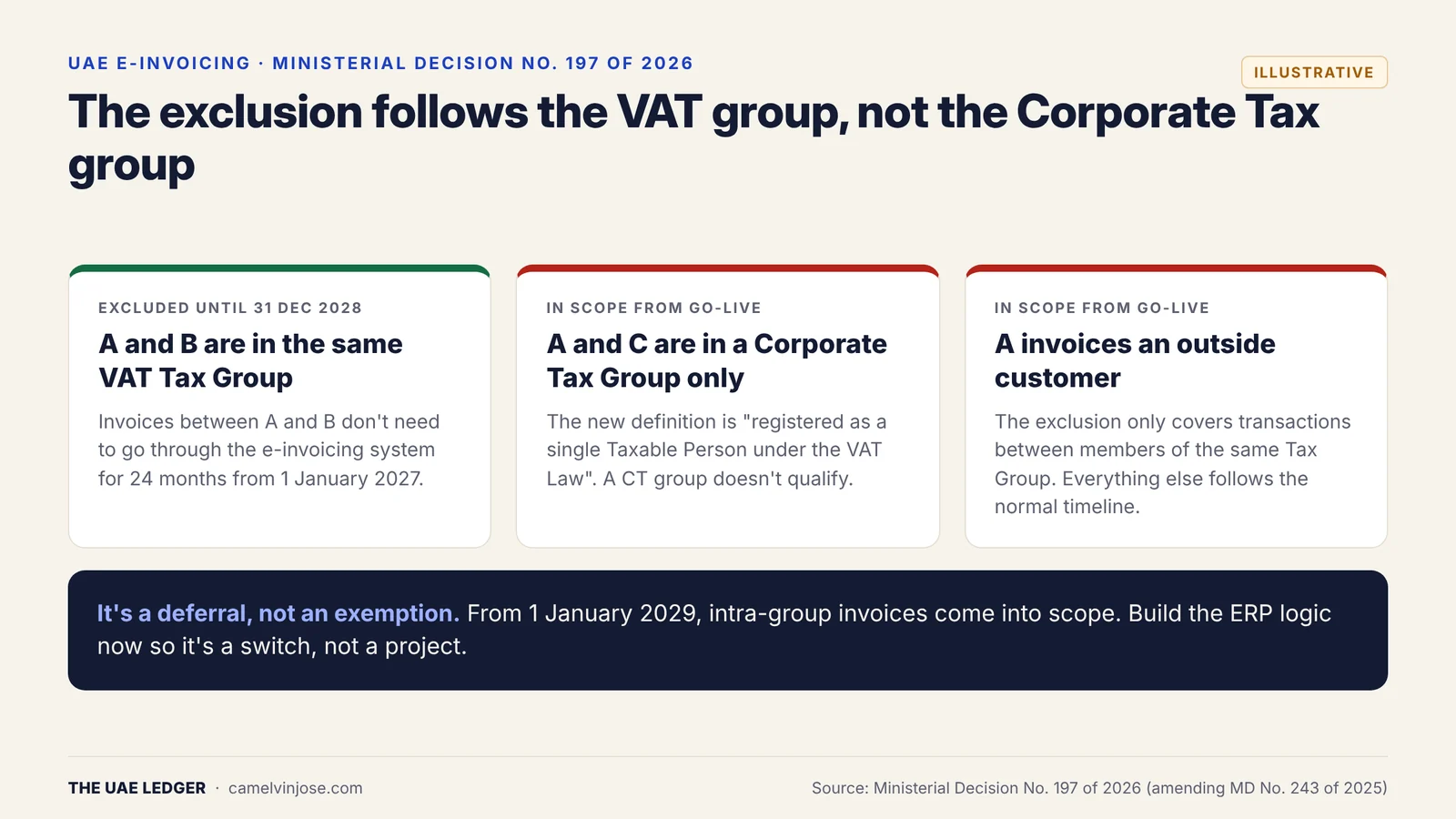
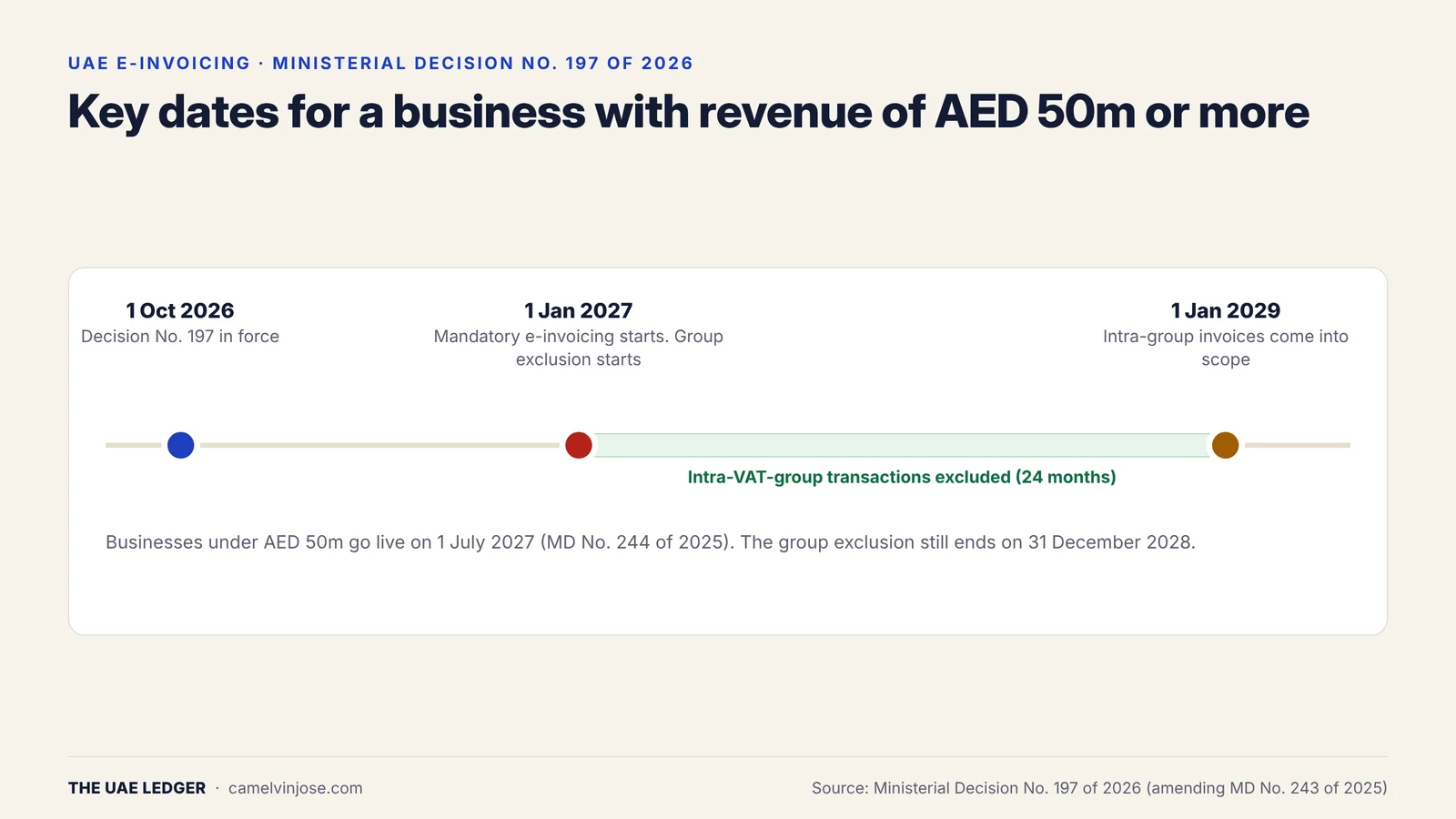
- 1 October 2026Ministerial Decision No. 197 of 2026 takes effect. Transactions within the same VAT Tax Group are excluded for 24 months from 1 January 2027, the system failure notice is removed and the storage rule is relaxed. What changed.
- 26 October 2026The Ministry of Finance publishes version 2.0 of the e-invoicing guidelines. Who must comply.
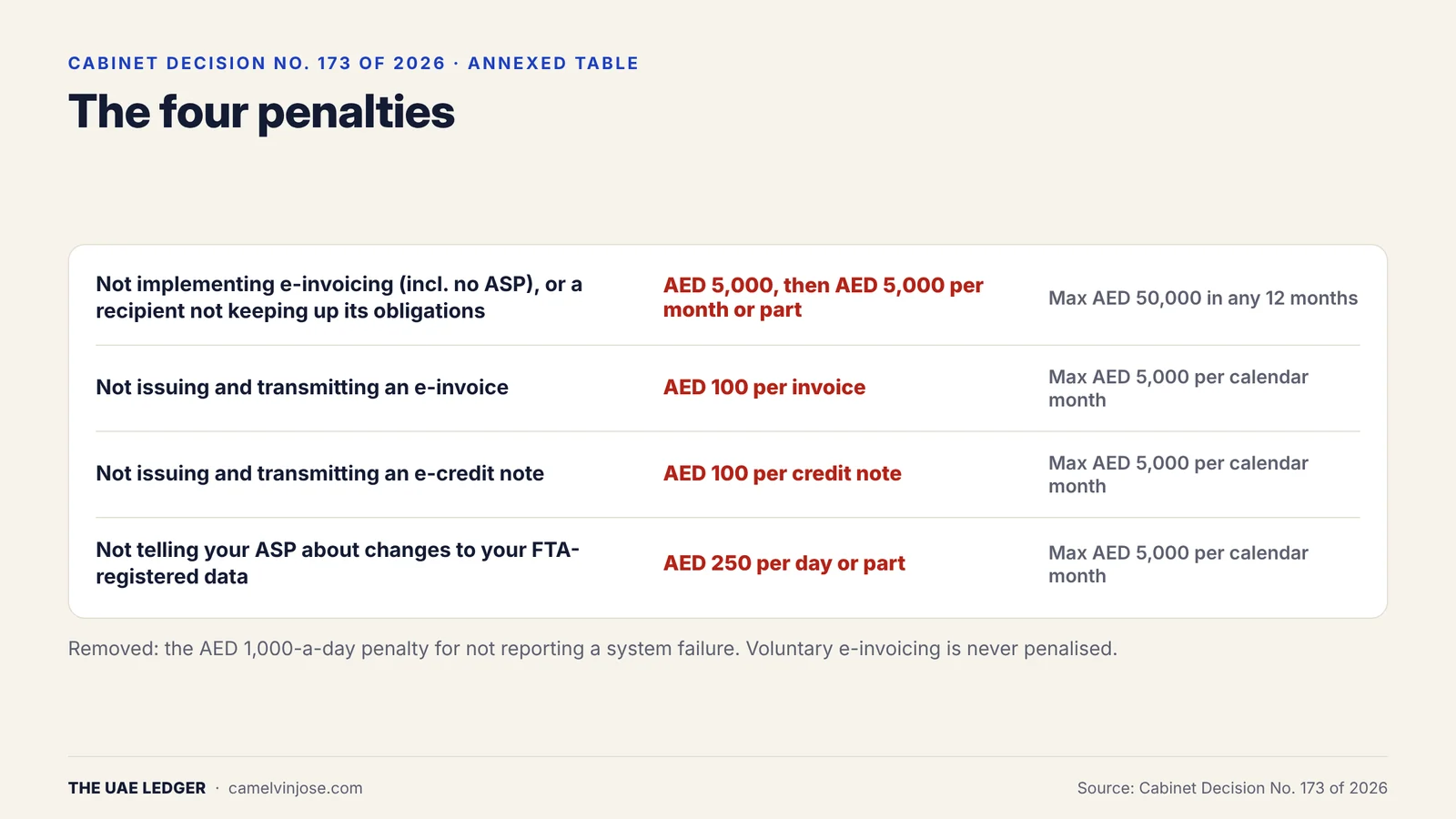
- 30 October 2026Deadline for businesses with revenue of AED 50 million or more to appoint an ASP. The same day, Cabinet Decision No. 173 of 2026 replaces the e-invoicing penalties. The new penalties.
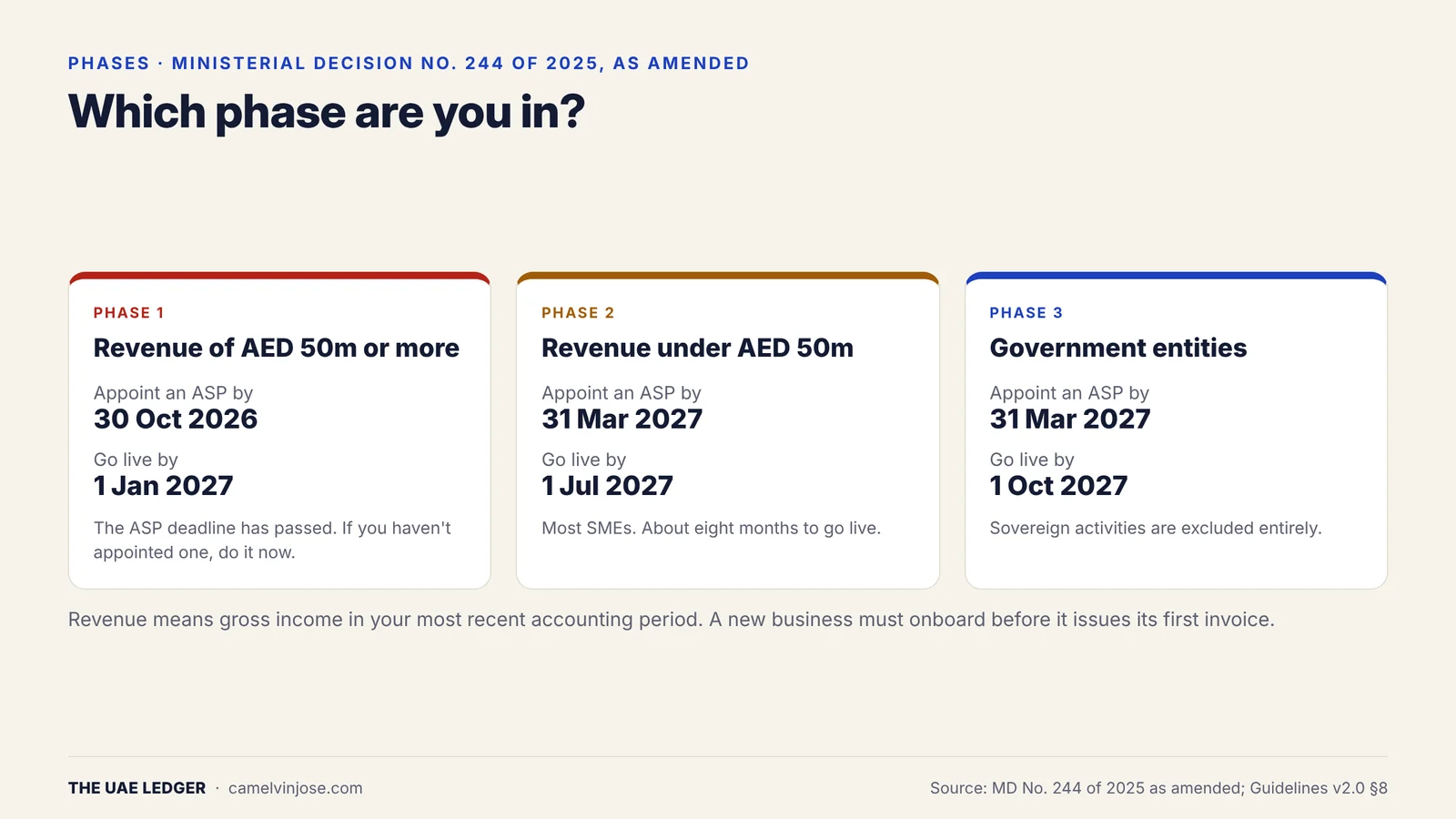
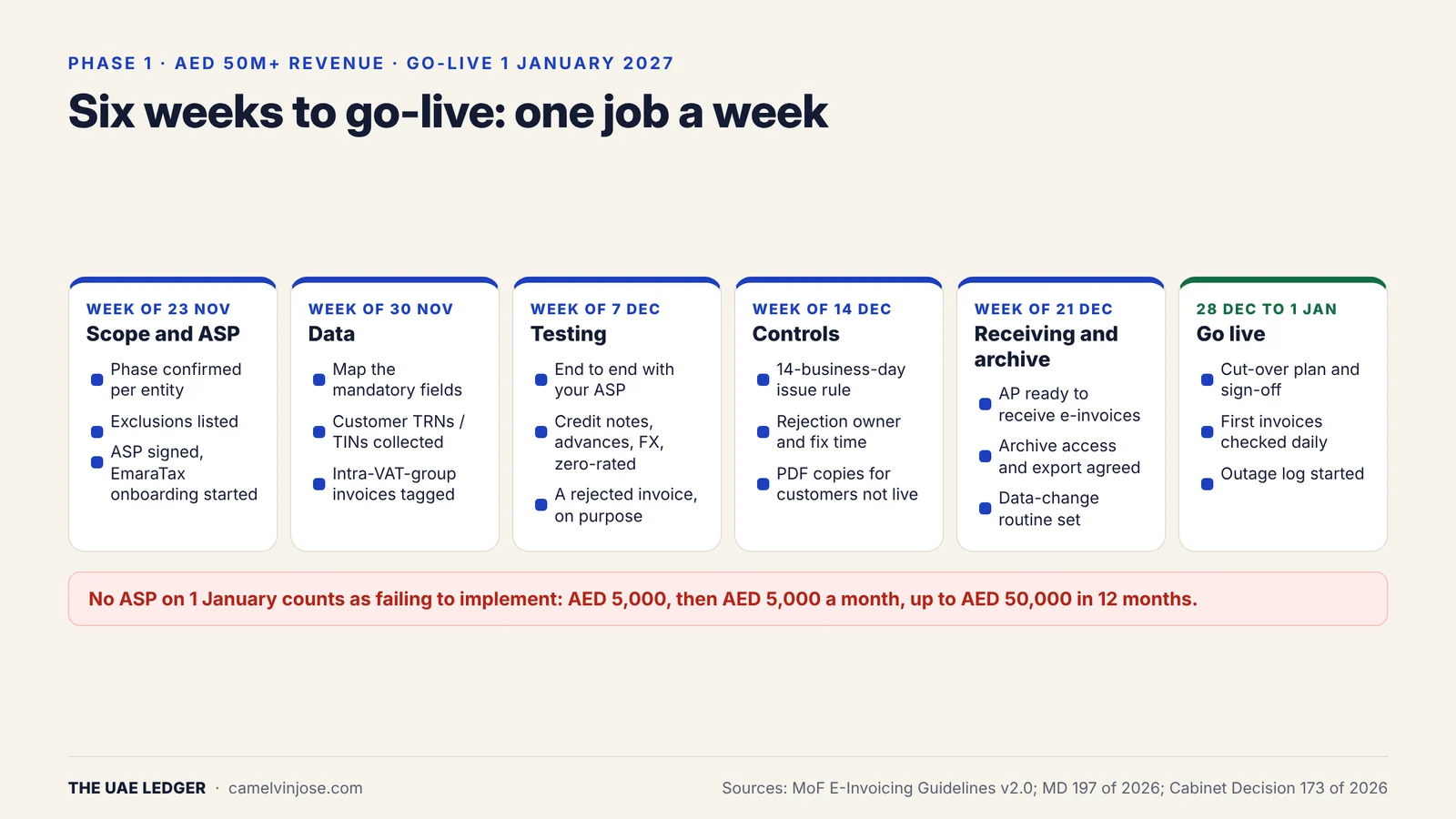
- 1 January 2027E-invoicing becomes mandatory for businesses with annual revenue of AED 50 million or more.
- 31 March 2027Deadline for businesses under AED 50 million and government entities to appoint an ASP.
- 1 July and 1 October 2027Mandatory for other in-scope businesses, and then for government entities.
Go-live dates are set by Ministerial Decision No. 244 of 2025. The Ministry of Finance can change them, so check its latest announcements before relying on a date.
What you will find here
Below: the guides, a gallery of the infographics from them, and the newsletter.
Guides & blog
E-Invoicing Goes Live on 1 January: A Six-Week Readiness Plan for AED 50m+ Businesses
A week-by-week plan for UAE businesses with AED 50 million+ revenue to be ready for mandatory e-invoicing on 1 January 2027: scope, data, testing, controls and cut-over.
E-InvoicingThe New UAE E-Invoicing Penalties: Cabinet Decision No. 173 of 2026 Explained
The four UAE e-invoicing penalties under Cabinet Decision No. 173 of 2026, the new AED 50,000 cap, what changed from Decision 106 of 2025, with worked examples.
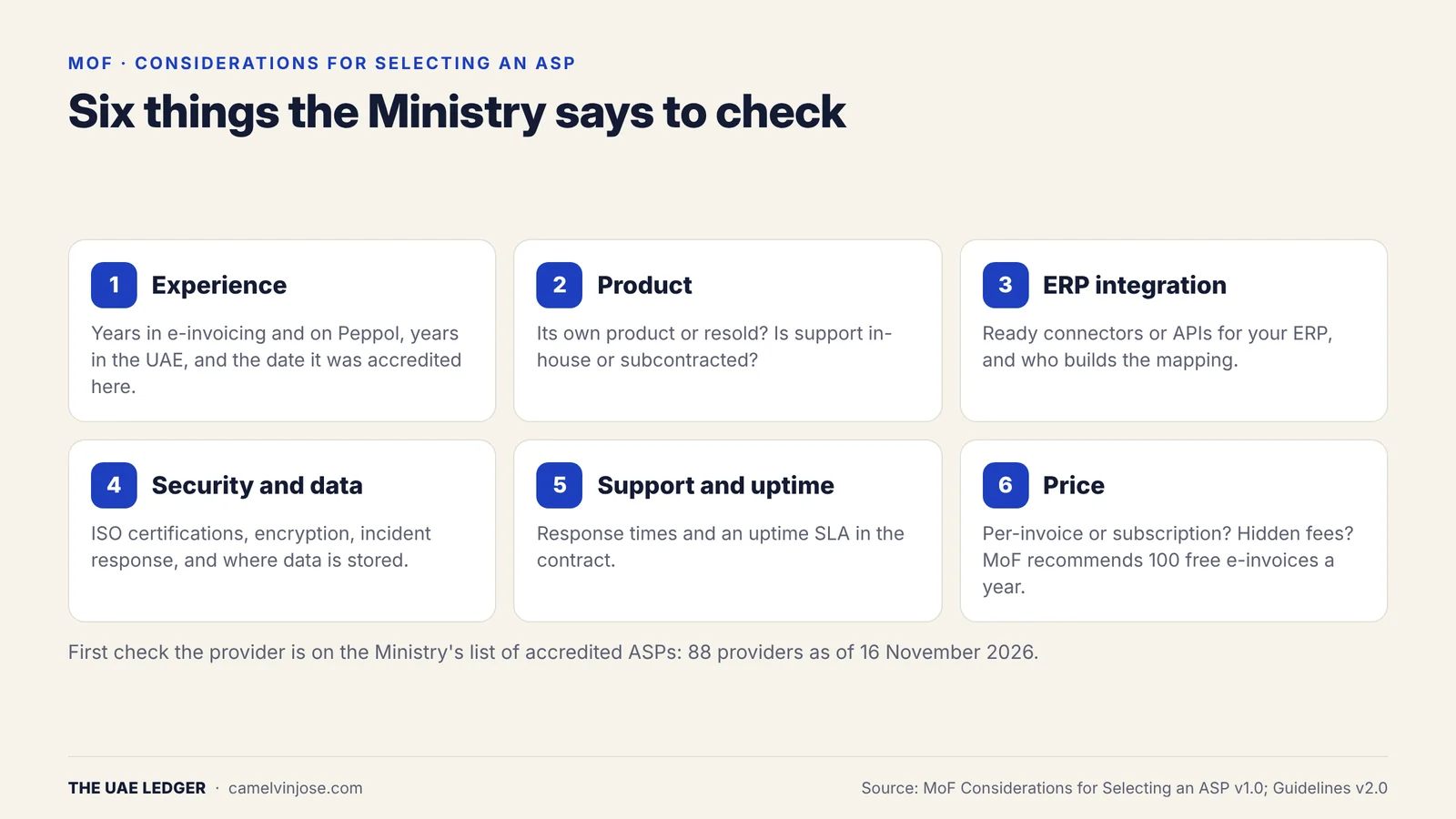
E-InvoicingChoosing an E-Invoicing Provider (ASP) in the UAE: What to Check Before You Sign
How to choose a UAE e-invoicing Accredited Service Provider: the Ministry of Finance's selection criteria, contract points to check, and the onboarding steps.
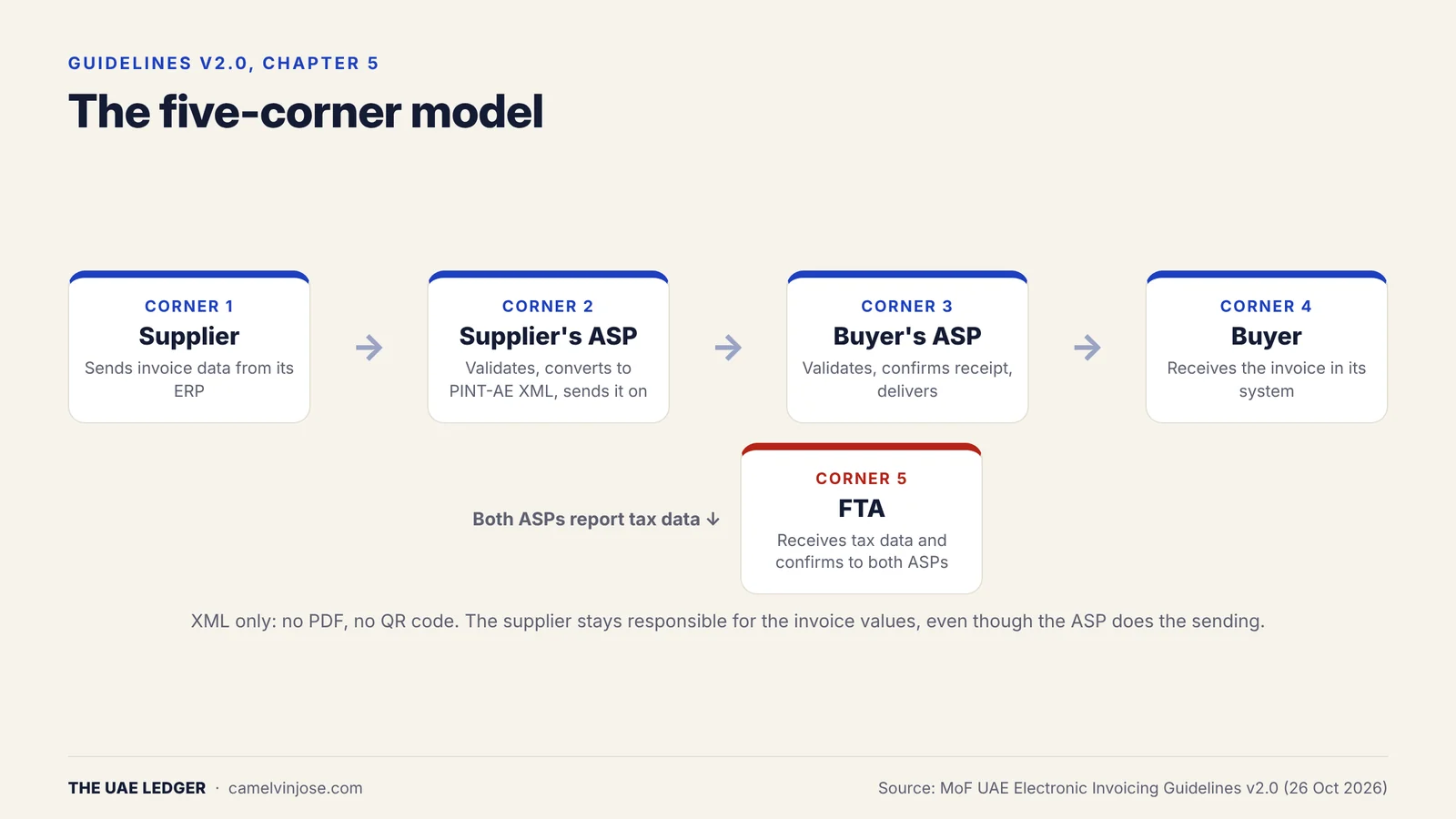
E-InvoicingHow a UAE E-Invoice Actually Travels: The Five-Corner Model in Plain English
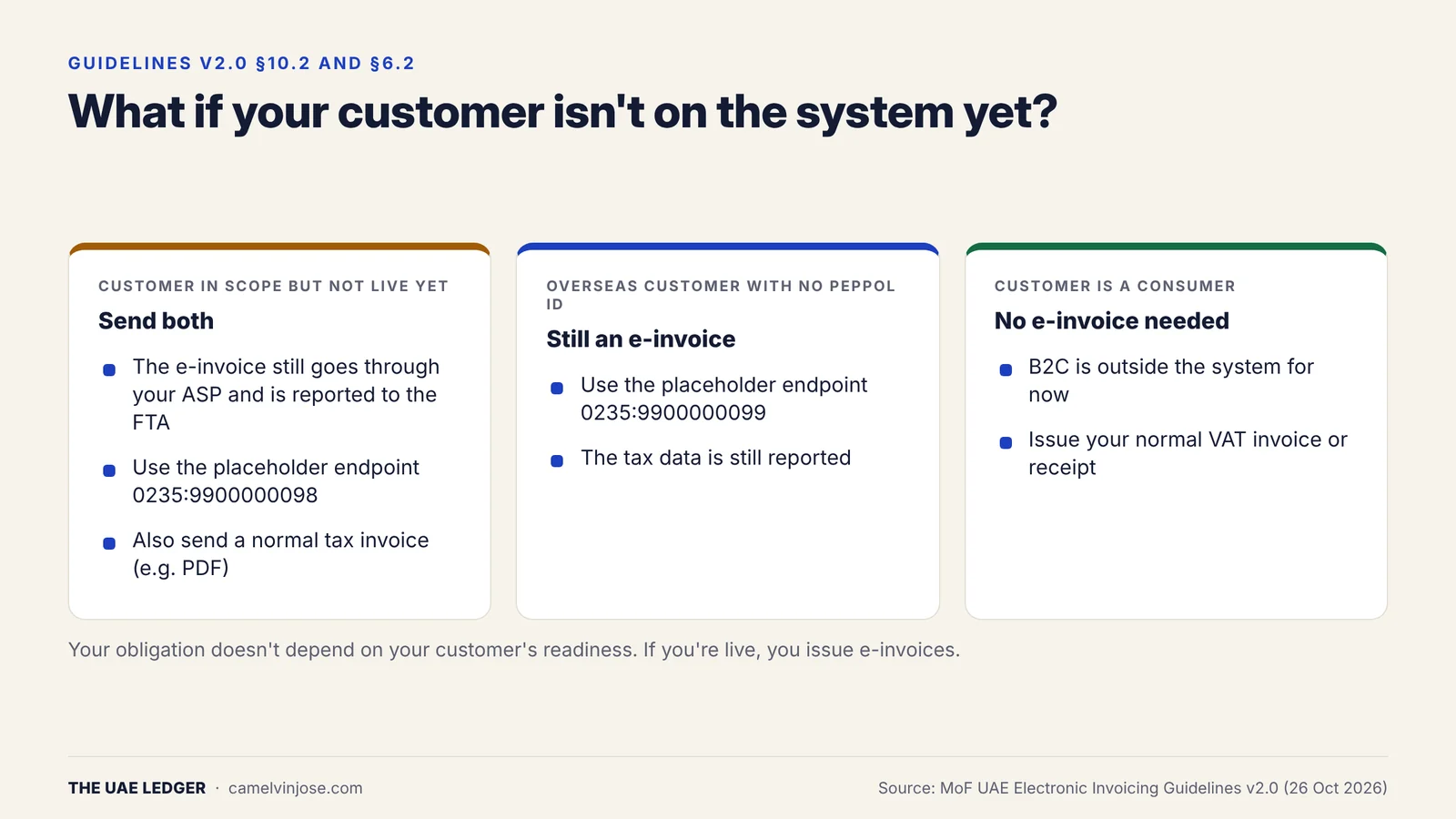
How a UAE e-invoice moves from your ERP to your customer and the FTA, what your ASP does, what an e-invoice contains, and what to do when a customer isn't ready.
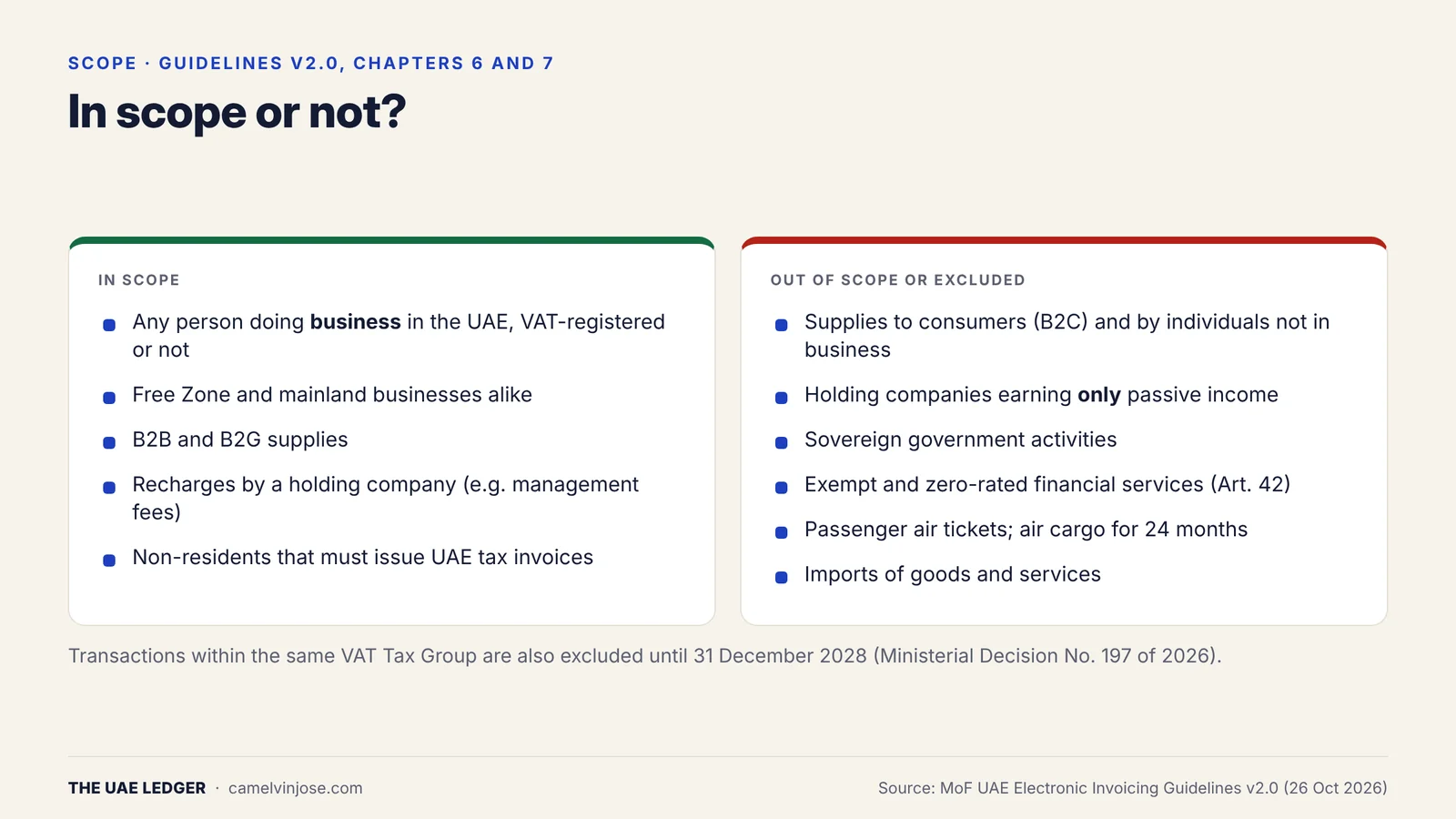
E-InvoicingDoes UAE E-Invoicing Apply to Your Business? Scope, Exclusions and Your Go-Live Date
Who UAE e-invoicing applies to, what is excluded, how the AED 50 million test works, and your deadlines to appoint an ASP and go live, per Guidelines v2.1.
E-InvoicingFive Changes to the UAE E-Invoicing Rules, and the One Most Groups Will Misread
What Ministerial Decision No. 197 of 2026 changed in UAE e-invoicing: the 24-month Tax Group exclusion, 14 business days, data storage and system failures.
Gallery