Too Cheap, Wrong Licence, Odd Bank Account: 4 Red Flags That Can Cost You Input VAT
Four transaction red flags that can cost you input VAT under FTA Decision No. 13 of 2026: payment, price, licence scope and goods origin (FTA Examples 4 to 7).
A supplier can pass every identity check in Part 2 and still be part of an evasion chain. That is why Article 4 of Decision No. 13 shifts the focus from who you buy from to what you are buying, and how you pay.
There are six supply checks:
- Commercial reason: the supplier’s involvement rests on genuine commercial reasons.
- Payment conditions: the method and terms make commercial sense. Electronic payment is the default.
- Price and margin: not unjustifiably far from market without a clear reason.
- Licence scope: what you buy falls within the supplier’s ordinary or licensed activity.
- Goods origin: authenticity, origin, and the supplier’s right to sell the goods.
- Intermediaries: a clear, justified commercial reason for any middleman’s role.
The FTA illustrates four of these with worked examples. Two businesses lost; two got it right.
Red flag 1: the payment doesn’t make sense (Example 4)
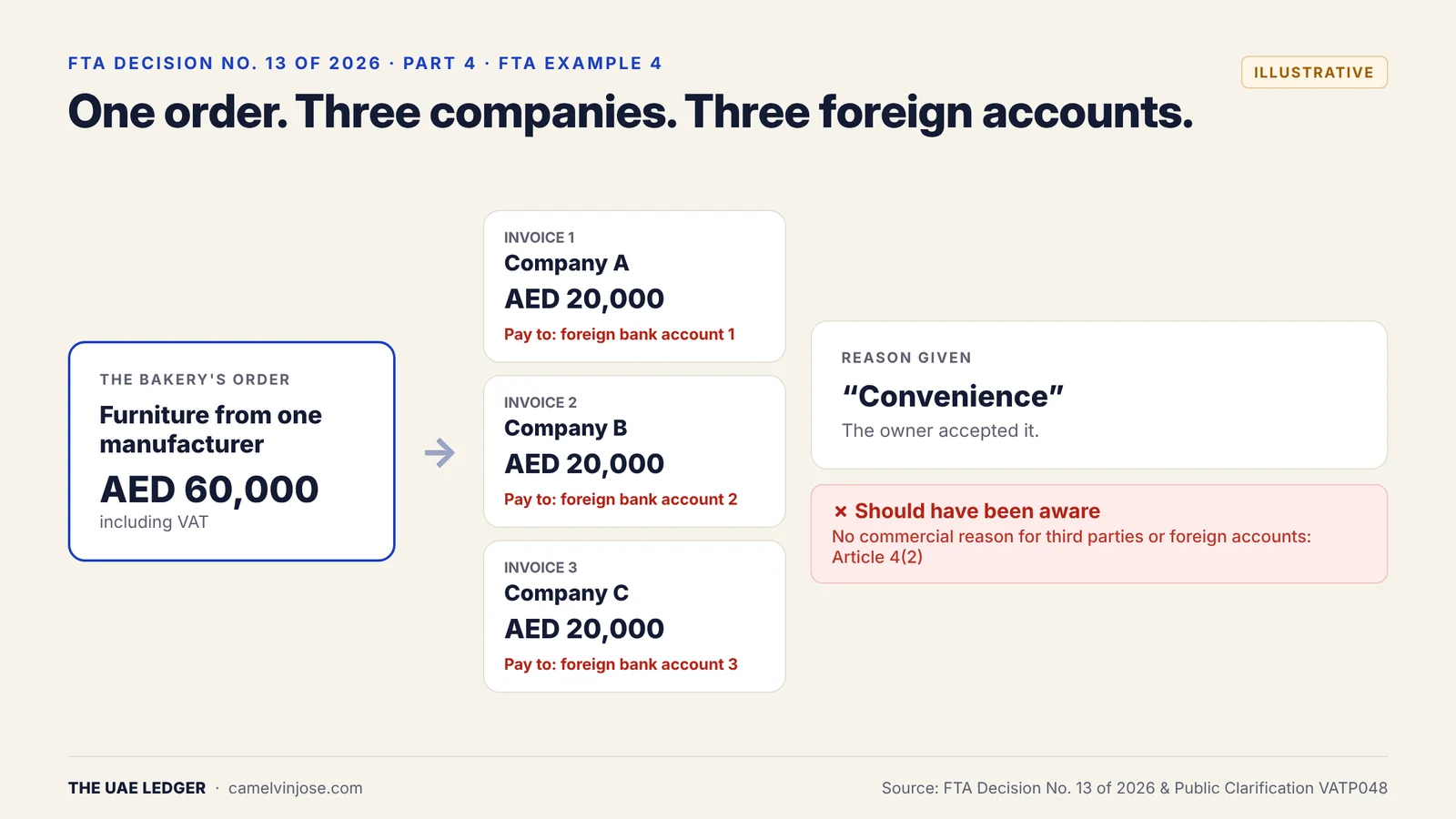
A bakery orders furniture worth AED 60,000 (including VAT) from one manufacturer. It is billed as three AED 20,000 invoices from three different companies, each naming a different foreign bank account. The reason given: “convenience”. The owner accepts it.
Result: should have been aware. There was no commercial reason for third parties or foreign accounts, under Article 4(2).
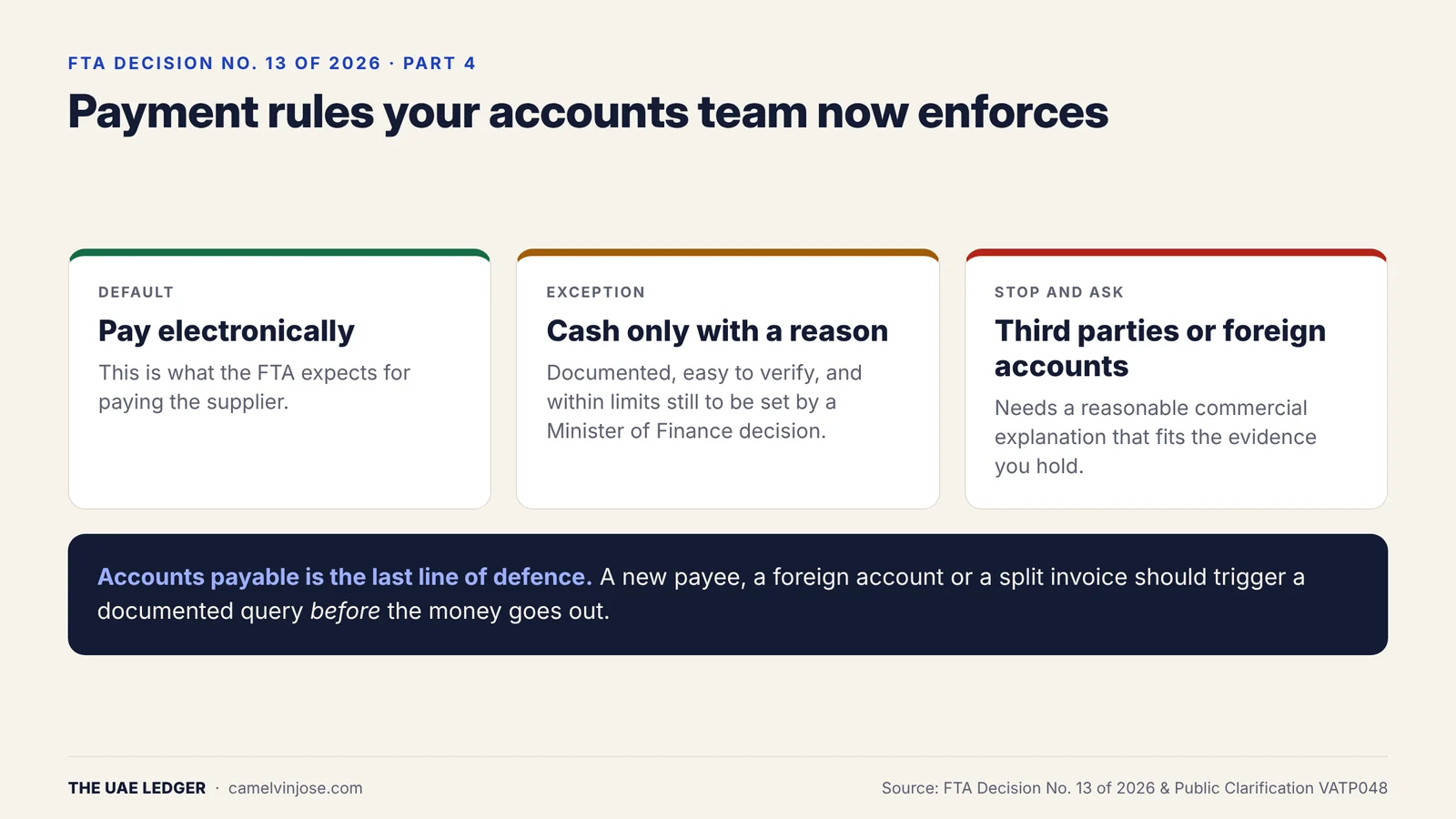
The payment rules in plain terms:
- Pay electronically. This is the expected default.
- Cash only with a reason: documented, easy to verify, and within limits still to be set by a Minister of Finance decision. Those limits haven’t been published yet.
- Third parties or foreign accounts need a reasonable commercial explanation that fits the evidence you hold.
Accounts payable is your last line of defence. A change of payee, a foreign account or a split invoice should trigger a documented query before payment, not after.
Red flag 2: the price is too good (Example 5)
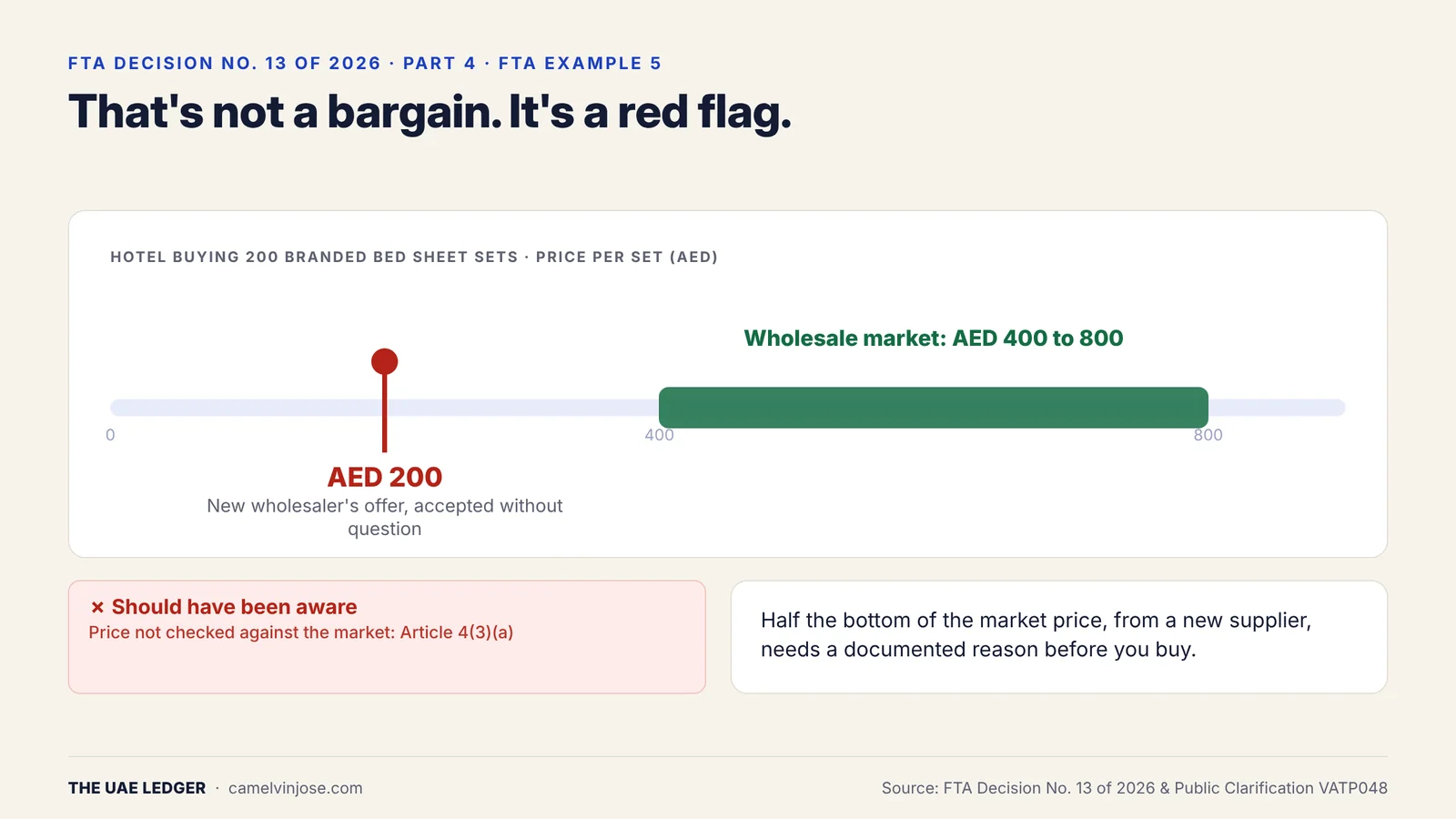
A hotel needs 200 branded bed sheet sets. The wholesale market price is AED 400 to 800 per set. A new wholesaler offers AED 200. The hotel accepts without question.
Result: should have been aware. The price wasn’t checked against the market, under Article 4(3)(a).
Half the bottom of the market range is not a bargain. It’s a flag. A big discount can be legitimate (clearance stock, a closing business), but you need that reason in writing, before you buy.
Checks that worked: licence scope and goods origin (Examples 6 and 7)
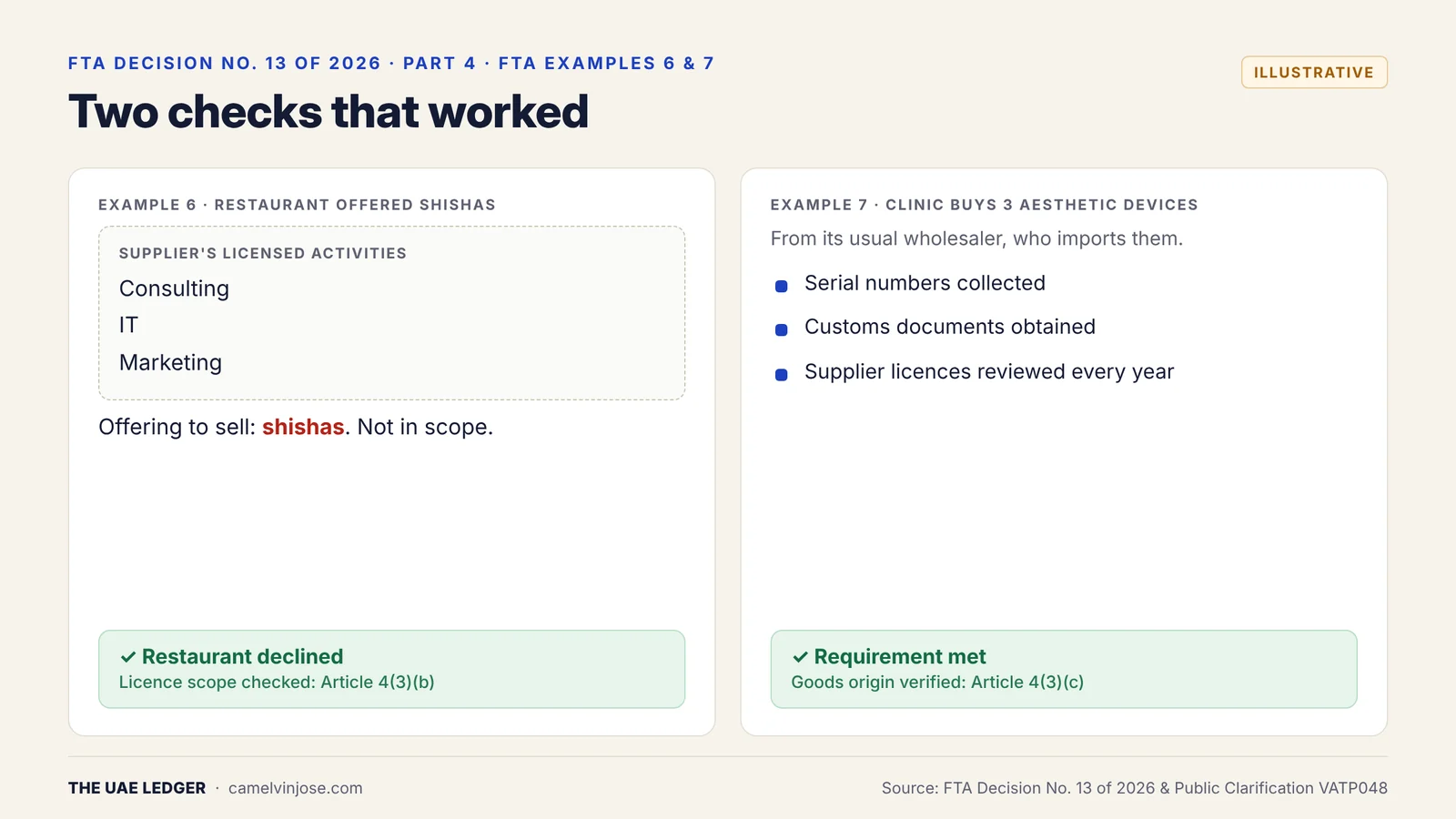
Example 6: the restaurant. A new wholesaler offers to sell shishas. The restaurant checks the trade licence. It covers consulting, IT and marketing only. The restaurant declines.
Result: the check worked. Licence scope verified under Article 4(3)(b). A two-minute licence check stopped a bad purchase.
Example 7: the clinic. The clinic’s usual wholesaler imports three aesthetic devices. The clinic collects serial numbers and customs documents, and still reviews the supplier’s licences every year.
Result: requirement met. Goods origin verified under Article 4(3)(c). Even a long-standing supplier gets re-checked.
Your supply checklist (copy this)
For every taxable supply above the small-supply threshold:
- Why this supplier? Commercial reason noted
- Paid electronically to an account in the supplier’s own name. If not: written reason
- Price compared with market (two quotes, a price list or a past purchase). If far off: written reason
- Goods or services fall within the supplier’s licensed activity
- For goods: origin evidence kept (serial numbers, customs documents, distributor authorisation)
- Any intermediary: their role and why it’s needed, in writing
Next, Part 5: the final piece. If none of this is documented, none of it happened. The evidence file, the written policy, FTA Example 8 and a 6-step plan to get compliant.
Common questions
Can I pay a UAE supplier's invoice into a foreign or third-party bank account?
Only with a reasonable commercial explanation that fits your evidence. In FTA Example 4, accepting 'convenience' as the reason meant the buyer should have been aware.
Is a very low price a VAT red flag?
Yes. In FTA Example 5, a hotel paid half the bottom of the market range without checking, and should have been aware. A real discount needs a written reason before you buy.
Why check the supplier's trade licence?
The goods or services must fall within the supplier's licensed activity. In FTA Example 6, a licence for consulting and IT only showed the supplier couldn't sell shishas.
This article is general information and may be out of date. Check the latest guidance from the Federal Tax Authority before acting.